Traditional SD-WAN architectures have long relied on a fundamental misconception: that synthetic network probes equate to application health. In the legacy era of wide-area networking, sending synthetic probes—such as those used in outdated IP SLA tools—from the branch to remote destinations was the standard for measuring path performance.
As the enterprise transitions to a SaaS-enabled, cloud-first reality, these methods are not sufficient. Probes are never enough, never have been, and never will be. Achieving true application assurance in any enterprise architecture requires real-time, application-level actionable metrics rather than probe data guesswork paired with rudimentary failover behaviors.
The Illusion of Assurance: The Fatal Flaws of Classic Probes
In traditional environments, network administrators often clung to the comfort of the classic IP SLA (IP Service Level Agreement) probe to perform network traffic failovers. However, this reliance is built on limited information, not the complete end to end picture. This legacy approach routinely falls victim to many fallacies:
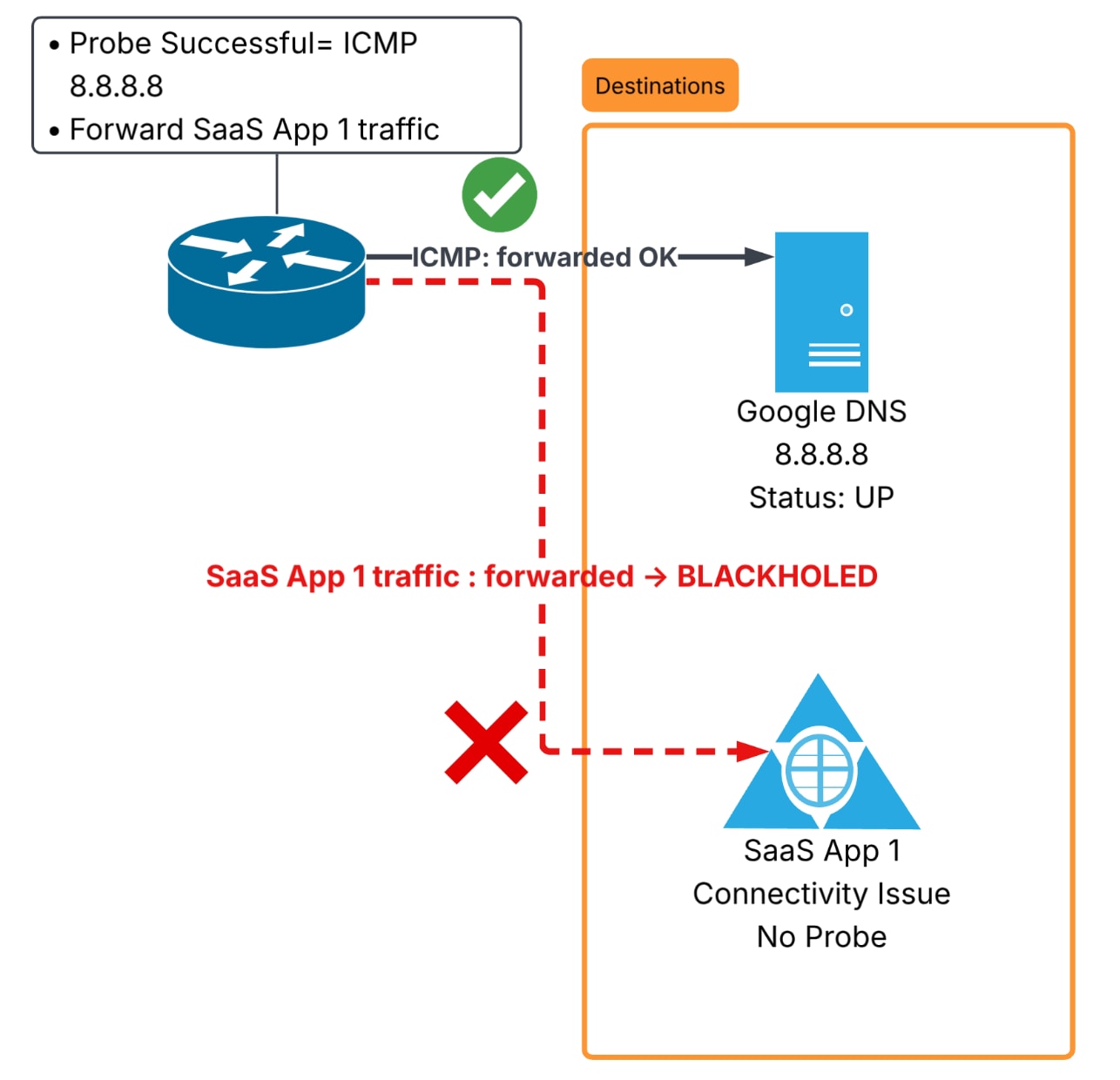
- The Fallacy of the 8.8.8.8 Standard: The oversimplified assumption that if an edge router successfully pings 8.8.8.8 then the entire internet is operational. Additionally, most willa also confirm that the application is reachable, connected, and performing well. In practice, pinging one internet destination only indicates that the one destination is available, ignoring billions of other internet destinations.
![]()
Figure 1 - Challenge Number 1 - Probe fails to detect inherit application reachability issues
- The Status Page Delusion: The assumption that offloading traffic locally is safe simply because you can ping a SaaS provider’s status page. Whether it is Microsoft O365, a critical ERP system, or a payment processing gateway, a responsive front-door ping does not mean the complex, authenticated backend services are actually functional/reachable. Only legitimate authenticated user traffic can validate service health. In addition, public status pages lag behind the real-world status and only trigger minutes to hours after a major to critical service failure has occurred.
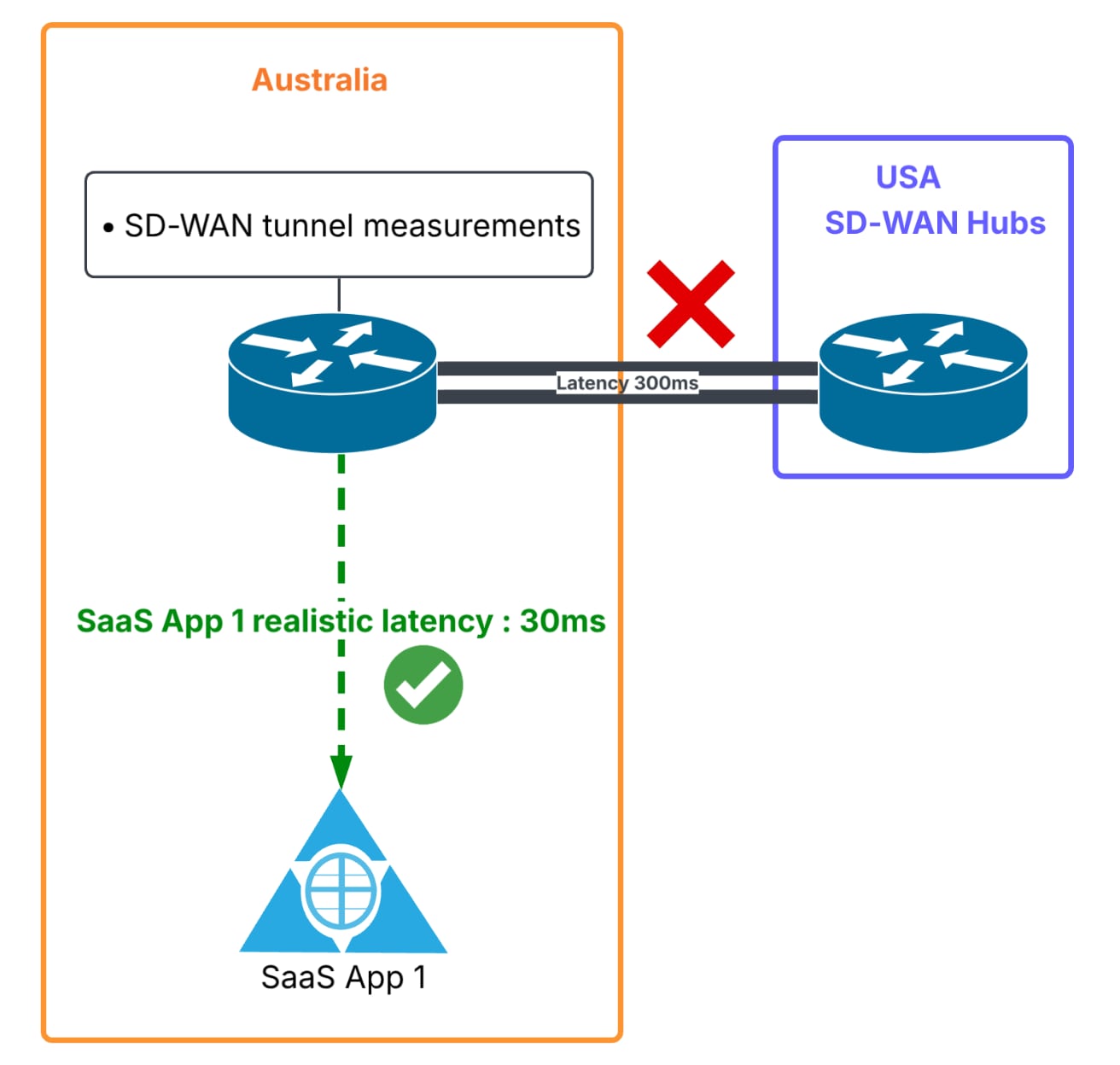
- The Hub-is-Up Halo Effect: The flawed logic that just because a persistent tunnel connection to a datacenter or an SSE regional hub is active, all traffic routed there is inherently healthy and performing optimally. The path to the hub is not the health of the network traffic itself; it is only a measurement of the tunnel, which itself varies based on the health probe settings of the tunnel itself.
![]()
Figure 2 - Challenge Number 3 - Probes measured over irrelevant pathing
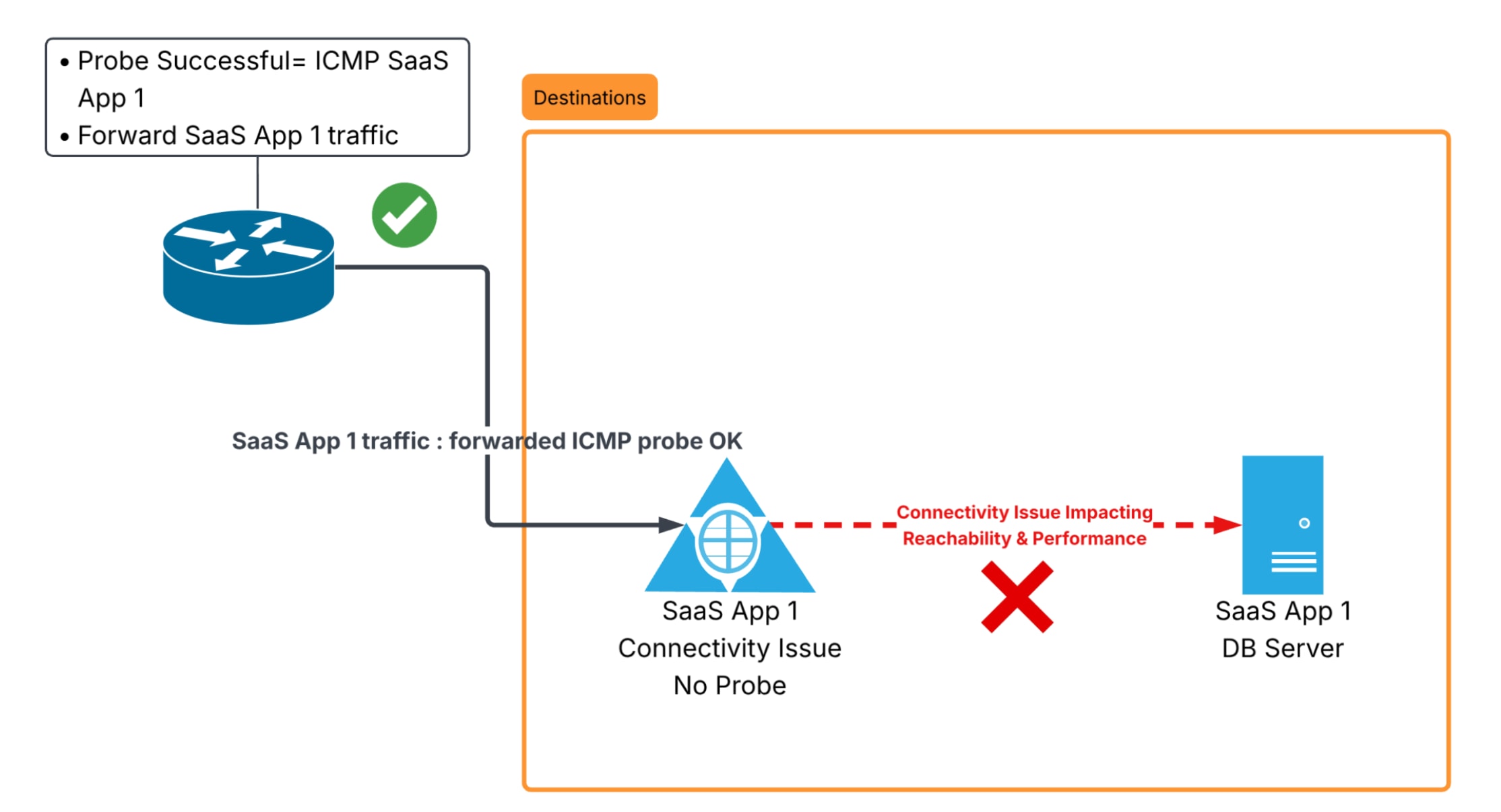
- They Test the Wrong Target: Probes typically only test the application or network "front doors." Today’s applications are infinitely more complex, relying on hundreds of geo-distributed load balancers, interlocking application services, DNS services, and backend databases. A simple probe knows nothing of this complexity, nor how to automatically respond to such an event.
- The Tests are Synthetic and Incomplete: Relying on ICMP, wget, or even a full curl to a test page is an entirely synthetic exercise. These simple synthetic tests fail to reflect real, authenticated user behavior and actual transactional success and performance.
![]()
Figure 3 - Challenge Number 2, 4, and 5 - Probe fails to detect inherit Application back end issues
- The "Slashdot Effect" denial of service impact: When scaled across an enterprise, thousands of branches and users aggressively probing a destination overwhelms the target, which happens to be your critical business infrastructure. In attempting to monitor availability, these probes instead cause a self-inflicted denial-of-service attack on your own critical services, breaking the very service that you’re trying to protect. Probes will also saturate low-bandwidth links and run up charges on metered links with spurious data usage.
- Applying real world sample rates to Nyquist's Theorem: Nyquist's theorem asserts that in order to measure a signal, you need to sample at twice its period. When applied to network measurements, probes do not test frequently enough to detect an outage. Because they only sample at infrequent intervals, transient outages are missed, particularly when probe intervals have been relaxed to prevent overwhelming targets.
- A Hidden Management Tax, what to probe, what not to probe?: Probes do not magically deploy or maintain themselves; they require tedious, manual configuration and validation. In a typical branch environment, managing any relevant number of these probes severely taxes administrative resources. One simply cannot write a probe for every single application in modern enterprises. Even for a single SaaS app, there are hundreds of server destinations and DNS services needed.
- Over-reactive and Manual Responses: When a probe inevitably fails, the subsequent responsive actions are often manual and notoriously over-reactive, leading to unnecessary route flapping and network instability. As an example, if a router is unable to ping 8.8.8.8, it will change its default route, re-directing all internet traffic to another path, whether it was affected or not, independent of disruptive NAT boundary changes incurred. Then, when 8.8.8.8 is available again, all traffic will switch back again, causing another disruptive change.
- Fragmented Visibility: Probes only test a specific link or fragment of a path—a metric of much lesser impact—and utterly fail to validate the true end-to-end user experience. True site health is measured by analyzing real user traffic, ideally across all paths leaving a branch.
From IP-SLA to Application SLA - The Application-Defined Future: Prisma SD-WAN
To guarantee application assurance in a modern enterprise, organizations must abandon network-centric probing in favor of real-time application visibility. Prisma SD-WAN addresses this by shifting from legacy packet-routing to an Application-Defined Fabric. Rather than relying on synthetic estimates, Prisma SD-WAN leverages real-time application-level metrics to enable ensure operational resilience and exceptional user experiences. This is achieved through several core innovations:
- Real-Time Application SLAs: Instead of measuring dummy packets, Prisma SD-WAN application SLAs identify, prioritize, and monitor the actual application flows to enable pristine client-to-server connectivity and performance. This means the network continuously measures the exact transactional health of the app itself.
- App-Aware Path Selection: Because Prisma SD-WAN understands the precise requirements of individual applications in real-time, it can automatically steer SaaS application traffic over the best-performing direct internet paths using intelligent, application-defined policies.
- Autonomous Resilience: With deep application visibility across all WAN connections, Prisma SD-WAN applies these application SLAs on all paths to maximize uptime, providing autonomous resilience and seamless failover during network brownouts.
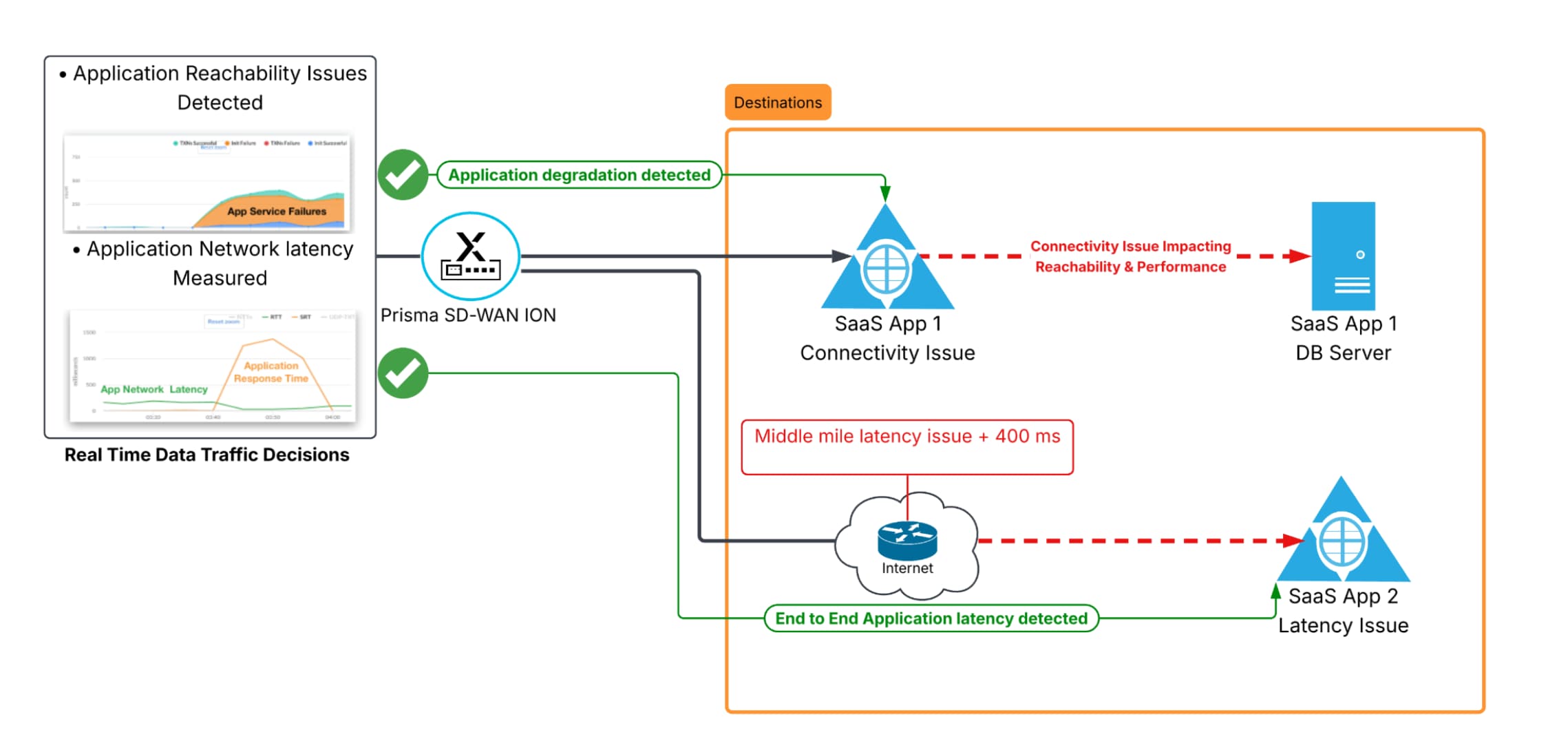
Figure 4 - Real time actionable insights - Detecting and navigating around modern Network issues
Conceptually, relying on traditional IP SLAs and bookended measurements might seem like an easy carryover from the days of legacy networking, much like treating a branch office like a basic guest Wi-Fi network. However, this approach leaves enterprises completely blind to the realities of SaaS performance.
Application assurance cannot be simulated. It must be directly measured and continuously enforced. By adopting Prisma SD-WAN, organizations can leave behind the synthetic probes of yesterday and embrace real-time, application-defined metrics to deliver unparalleled connectivity, security, and performance for every user. Contact us today to start your journey.